撰文 | 王沛璐 责编 | 周叶斌
尽管儿童癌症幸存者在过去半个世纪5年生存率有显著提高,然而肿瘤和相关治疗引起的晚期(首次确诊5年后)超额死亡数(相比于普通人群)却未有明显降低,相当比例的生存者在确诊10年后仍有较高的死亡风险。探索晚期死亡的主要原因及危险因素,对于改善儿童癌症生存者的长期生存有重要意义。近期,Stephanie B Dixon及其团队在 The Lancet 发表了题为 Specific causes of excess late mortality and association with modifiable risk factors among survivors of childhood cancer: a report from the Childhood Cancer Survivor Study cohort 的文章,通过开展一项多中心回顾性队列分析,基于北美儿童癌症生存者研究(the North American Childhood Cancer Survivor Study, CCSS)的长期随访数据,研究详细分析了确诊于1970年至1999年的34 230名儿童癌症5年生存者的晚期死亡原因及危险因素,诊断时中位年龄6岁、随访中位时间达29年(IQR 22.0至36.2年)。研究指出生存者40年累积全因死亡率达23%,约半数的死因与健康相关,超额死亡原因排名前三的是继发癌症、早发心脏疾病和脑血管疾病。遵循健康的生活方式、避免高血压和糖尿病分别与健康相关死亡风险下降20-30%有关。
如图1所示,确诊后早期的超额死亡主要为原发癌症的进展,而晚期主要为健康相关死亡。相比于普通人群,生存者的标化死亡比(standardized mortality ratio)为5.6,整体趋势从确诊后5-9年的18.1逐渐下降,确诊20年左右稳定在4.0,超额死亡主要为健康相关死亡(包括继发癌症、心肺疾病等,不包括原发癌症复发或进展、事故或自杀等外部原因)。不同原发癌症类型的超额死亡率存在差异,比如急性淋巴细胞白血病的晚期超额死亡率在整个随访中不超过100例/每万人年,而霍奇金淋巴瘤则从确诊后25年的100例/每万人年逐渐上升至400例/每万人年。此外,研究者发现放化疗的剂量和晚期死亡风险存在一定的剂量相关效应,提示未来儿童癌症的治疗方案优化需在保持5年生存率的同时进一步降低治疗强度。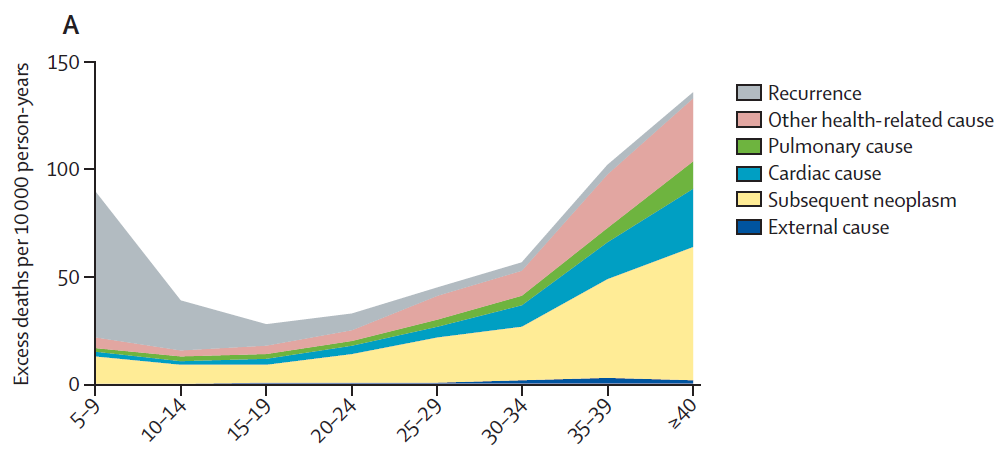 图1. 超额死亡发生率随确诊后生存时间变化基于对生存者晚期死因的详细分类和与普通人群的对比,研究发现生存者的健康相关死因与普通人群相似,但是生存者的死亡风险更高、发生年龄更早。60岁以内人群的前十大死因中有九项在生存者中高发,包括继发癌症、心脏疾病、脑血管疾病、败血症、流感/肺炎、肾衰竭、糖尿病、肝脏疾病和慢性下呼吸道疾病。确诊40年后,三分之二的超额死亡是由于继发癌症、心脏疾病和脑血管疾病,其中最主要的具体疾病为消化系统肿瘤、脑血管疾病、缺血性心脏病和瓣膜性心脏病(图2)。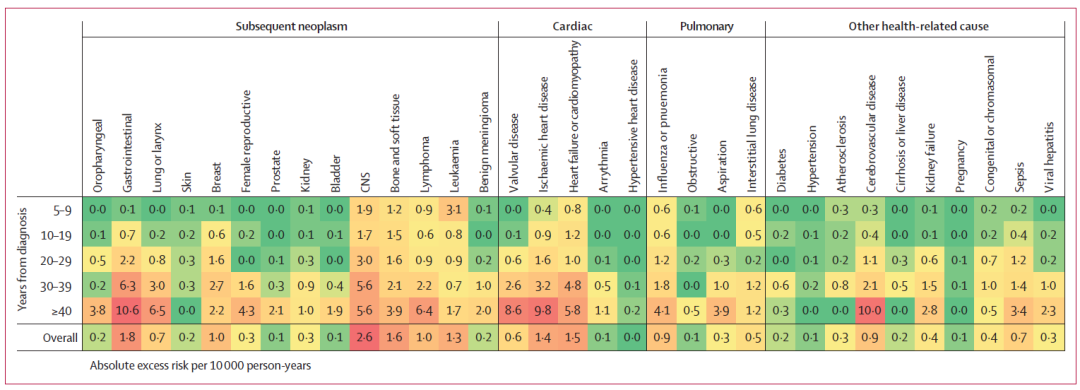
图二:不同死因的超额死亡热图(绿色-低值,红色-高值,黄色-中位值)既然生存者的晚期死亡原因与普通人群相似,那么生存者是否也可以从健康的生活方式中获益呢?根据生存者的问卷调查数据,研究者计算了生存者的健康评分(包括四项指标:吸烟、酗酒、体重过轻或肥胖、久坐或活动量不足)。仅27%的生存者遵循了健康的生活方式,而相比于生活方式不健康的生存者,生活方式健康的生存者晚期死亡风险较低。遵循健康生活方式、无高血压或无糖尿病分别与总体健康相关死亡风险下降20-30%有关,而且这些因素对死亡风险的影响独立于传统的心血管风险因素(表一)。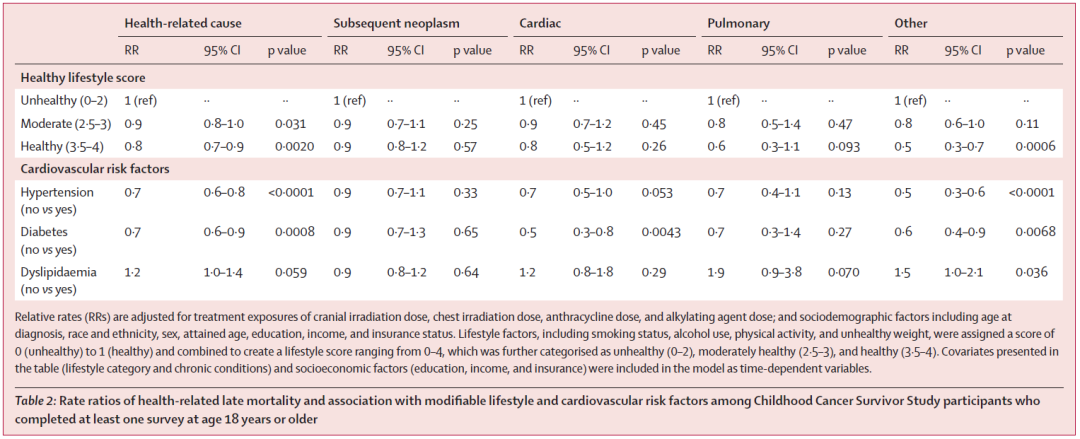
表1. 生活方式、心血管疾病危险因素与健康相关晚期死亡风险的关联这项研究再一次强调了儿童癌症的治疗不仅要实现逆转肿瘤进展的短期目标,也需要考虑到降低毒副作用、改善生存的长期目标。儿童癌症早期的治疗强度对于几十年后的健康仍然有持续影响,这对于优化治疗方案有重要指导作用。虽然研究纳入的生活方式数据有限(比如缺乏重复测量、缺乏膳食数据),作为少数整合了生存者临床数据、长期随访、疾病结局与生活方式信息的大型研究,这项研究为在儿童癌症生存者中进行生活方式干预提供了重要证据支持。在儿童癌症生存者中推广并提供长期的健康行为指导,应当受到更多医疗工作者和和政策制定者的关注。撰文

责编

制作
排版 | 车洁 校对 | uu
*本文由深圳市拾玉儿童公益基金会“儿童肿瘤前沿”团队编译或约稿,文中图表均源引自文献原文。本文著作权归文章作者所有,欢迎个人转发分享,未经允许禁止转载,作者拥有所有法定权利,违者必究。如需转载,请留言或联系[email protected]。本文旨在分享儿童肿瘤科研前沿成果,不是治疗方案推荐。如需获得疾病治疗方案指导,请前往正规医院就诊。
▼滑动查看更多▼
Background: 5-year survival after childhood cancer does not fully describe life-years lost due to childhood cancer because there are a large number of deaths occurring beyond 5-years (late mortality) related to cancer and cancer treatment. Specific causes of health-related (non-recurrence, non-external) late mortality and risk reduction through modifiable lifestyle and cardiovascular risk factors are not well described. Through using a well-characterised cohort of 5-year survivors of the most common childhood cancers, we evaluated specific health-related causes of late mortality and excess deaths compared with the general US population and identified targets to reduce future risk.Methods: In this multi-institutional, hospital-based, retrospective cohort study, late mortality (death ≥5 years from diagnosis) and specific causes of death were evaluated in 34 230 5-year survivors of childhood cancer diagnosed at an age younger than 21 years from 1970 to 1999 at 31 institutions in the USA and Canada; median follow-up from diagnosis was 29 years (range 5-48) in the Childhood Cancer Survivor Study. Demographic, self-reported modifiable lifestyle (ie, smoking, alcohol, physical activity, and BMI) and cardiovascular risk factors (ie, hypertension, diabetes, and dyslipidaemia) associated with health-related mortality (which excludes death from primary cancer and external causes and includes death from late effects of cancer therapy) were evaluated.Findings: 40-year cumulative all-cause mortality was 23·3% (95% CI 22·7-24·0), with 3061 (51·2%) of 5916 deaths from health-related causes. Survivors 40 years or more from diagnosis experienced 131 excess health-related deaths per 10 000 person-years (95% CI 111-163), including those due to the top three causes of health-related death in the general population: cancer (absolute excess risk per 10 000 person-years 54, 95% CI 41-68), heart disease (27, 18-38), and cerebrovascular disease (10, 5-17). Healthy lifestyle and absence of hypertension and diabetes were each associated with a 20-30% reduction in health-related mortality independent of other factors (all p values ≤0·002).Interpretation: Survivors of childhood cancer are at excess risk of late mortality even 40 years from diagnosis, due to many of the leading causes of death in the US population. Modifiable lifestyle and cardiovascular risk factors associated with reduced risk for late mortality should be part of future interventions.DOI: 10.1016/S0140-6736(22)02471-0
 专业点燃希望约 6 分钟